

SIgn Up To The Newsletter

Hadithi works with women artisans living in the communities surrounding Tsavo, south-eastern Kenya. In this dry, rural region, villages are scattered between hills, open plains, and protected wildlife areas. Craft has long been part of daily life here, and is practiced at home, shared between generations, and shaped by place.
Meet Artisan Communities that Work with Hadithi

Buguta Sewing Group
The Safari Animal collection is made by the Buguta Disabled Group, based in Buguta village. Their small workshop provides stable income for five women and is led by Mama Leah, who uses a wheelchair herself. Inspired by the wildlife around their village, the group creates soft animal toys that reflect the local environment. The workshop gives not only income, but independence, dignity, and a supportive community.
Thanks to HADITHI Customers we earn our own living, I am very proud. Namshukuru sana- thank you very much"
— Mama Leah, Buguta Sewing Group

Kasigau Basket Weavers
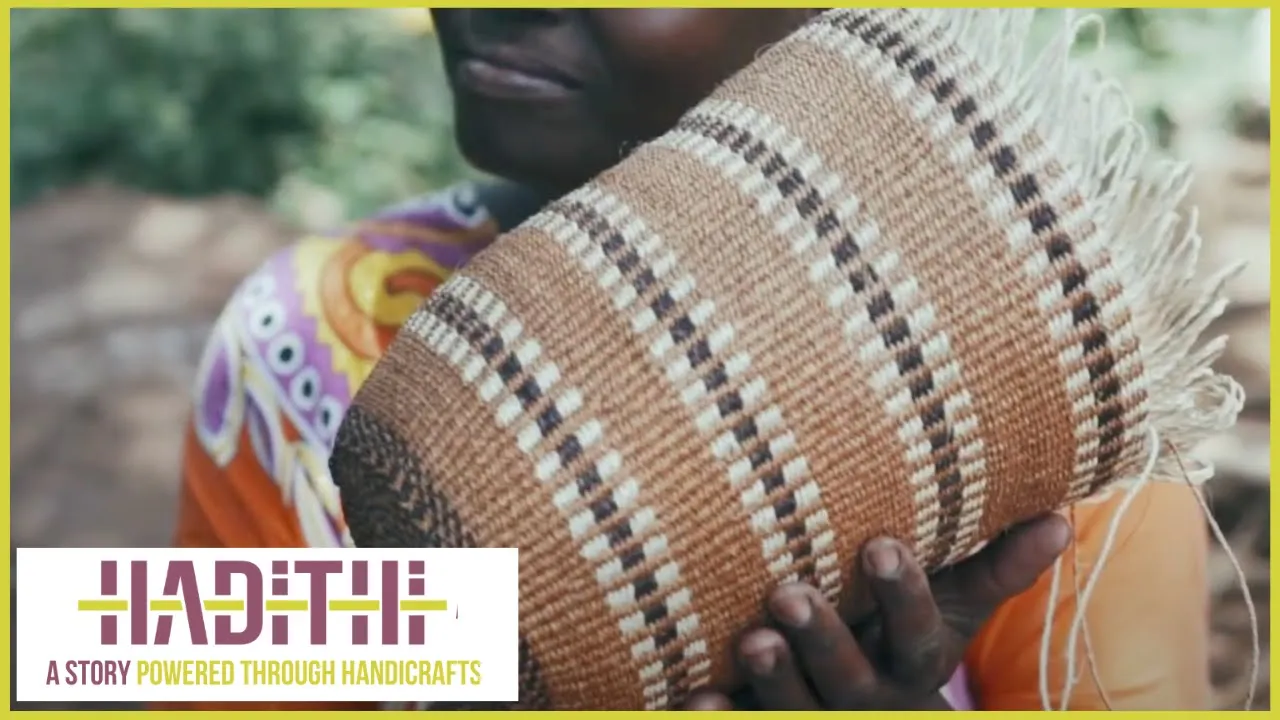
Around Mount Kasigau, over 1,000 women weave practical sisal baskets in villages spread across the foothills and surrounding settlements.Kasigau’s forest is vital — it captures moisture from passing clouds, providing water in a dry landscape. When rains are scarce, life becomes especially challenging. Basket weaving offers steady income, helping women support their families while continuing small-scale farming where possible. The baskets are made using techniques passed down through generations, adapted over time for everyday use.
Since the new constitution 2010 I have seen changes. Before women were at home, now they are looking for an income and more opportunities. Women use weaving to keep busy — Hilder, Kasigau Basket Weaver

Maasai Beading Groups
Hadithi works with Maasai women who create beaded jewellery and accessories along the stretch between the Mombasa Highway and Tsavo East National Park. Living between a busy transport route and wildlife territory, these communities face environmental and economic challenges.
Beadwork carries deep cultural meaning — traditionally made by women to mark age, status, and identity. For women working with Hadithi, craft groups are also spaces of support: shared savings, conversation, and collaboration. Since advanced training began in 2018, the quality and range of beadwork has grown, allowing more women to earn income and build long-term skills.
I love beading. My work can be done in the home anytime, wherever I might be sitting - I love to be able to do it in my own time and I decide. I can take care of my family. — Sinyat, Maasai Beading Group
Taita Basket Weavers
Basket weaving is a long-standing tradition in Taita culture. The fineweave baskets come from groups in the Taita Hills, using extra-thin sisal grown on their own farms.
The process is labour-intensive: picking the sisal leaves, stripping them to fibre, rolling twine by hand, and weaving each basket from start to finish. Natural dyes from flowers and bark colour the fibres, creating baskets that are 100% handmade, with patterns and designs entirely imagined by the Taita women themselves.
I weave every day, it’s what I do. My mum taught me how to weave, my dad taught me how to prepare the sisal. — Gladys Malemba, Taita Basket Weaver

Palm Basket Weavers
Palm weave baskets are made in Kajire, a settlement at the base of Sagalla Hill near Voi. Most residents are Duruma, one of the smaller Mijikenda sub-tribes. Access to water is limited, and crops often fail in the dry climate. Hadithi trained four more women’s groups in recent years to weave palm baskets, supporting income generation while keeping up with demand. The craft here is deeply traditional, passed down through generations of Mijikenda women.
I would weave baskets just to pass time or someone would ask me for a basket as a gift. Then along came the Hadithi trainings - its been a great journey. Now I can weave better quality baskets to attract a wider market. — Margaret - Kajire Basket Weaver